Boost Your Brand with an Ethical linked in content strategy
Discover a practical linked in content strategy to grow your audience, spark engagement, and convert followers into customers.

So, what exactly is a linked in content strategy? Think of it as your ethical game plan for creating and sharing content that actually moves the needle on your professional goals. It’s the essential shift from just posting whenever you feel like it to publishing with a clear purpose. Every single post should be building your authority and connecting you with the right people in a genuine way.
Why a LinkedIn Content Strategy Matters Now

Let’s be honest, LinkedIn isn't just an online resume anymore. It’s a bustling hub where professionals build their reputation, forge real connections, and yes, even close deals. Without a plan, you’re just shouting into a crowded room, hoping someone hears you. Your efforts feel scattered and, frankly, ineffective.
A dedicated linked in content strategy is what transforms your profile from a static page into a dynamic engine for growth. It’s the difference between randomly sharing an article and methodically building a reputation as the go-to expert in your field, without compromising your values or your budget.
Moving Beyond Simple Networking
Real growth on LinkedIn isn't about collecting connections like baseball cards; it's about building a brand. This guide is built on a simple, ethical philosophy: you don’t need a massive budget to get incredible results. All it takes is a focus on genuine relationships and delivering real value. Your LinkedIn plan is a key piece of a larger content strategy for social media that fuels both engagement and growth.
This approach all comes down to a few core ideas:
- Authenticity Over Automation: We're focused on creating content that genuinely sounds like you and connects with actual human beings. Choose ethics over empty engagement tactics.
- Value Before Volume: The aim isn't just to post for the sake of posting. It’s about sharing meaningful insights that truly help your audience.
- Consistency Builds Trust: A sustainable, affordable plan means you show up regularly, which is how you establish credibility over the long haul.
A well-crafted strategy gives you direction and clarity. It helps you zero in on the activities that directly contribute to your business goals, whether that’s generating leads, boosting brand awareness, or becoming a thought leader.
The Foundation for B2B Growth
For anyone in B2B, a thoughtful content plan is non-negotiable. It’s how you position yourself as the indispensable resource in your industry, attracting high-quality leads who are already looking for your expertise. When you consistently share valuable content, you’re nurturing potential clients long before they’re even thinking about a purchase.
This guide will walk you through, step-by-step, how to create a strategy that not only works but also feels authentic to you and your brand. Consider this your starting point for turning your LinkedIn presence into a predictable and powerful asset.
Defining Your Goals and Audience on LinkedIn
Before you write a single post, we need to lay the foundation. A powerful LinkedIn content strategy doesn’t start with a hunt for viral ideas; it starts with absolute clarity. This means defining what success actually looks like for you and getting crystal clear on who you're talking to.
Without this, you're just adding to the noise. Your content will feel random, it won't connect, and it definitely won't deliver the results you're after. Let's build that foundation right.
Setting Specific and Measurable Goals
The first thing we need to do is get past vague wishes like “get more followers” or “increase engagement.” Those are outcomes, not goals. A real goal is specific, measurable, and tied directly to a business objective. Think of it as giving your content a specific job to do.
What job are you hiring your content for? Here are a few concrete examples to get your mind working:
- Lead Generation: Generate 15 qualified inbound leads this quarter through content that encourages DMs or form fills.
- Website Traffic: Drive 25% more traffic from LinkedIn to our main product page over the next six months.
- Brand Authority: Land 3 podcast or webinar invitations in my niche this year by establishing myself as a go-to expert.
- Hiring: Attract 10 high-quality applicants for a key role by showing off our company culture and thought leadership.
When you set precise goals, you create a clear benchmark for success. It’s the only way to know what’s working and what isn’t, making sure your time on LinkedIn is an investment, not just an expense.
This approach isn’t just smart; it’s respectful of your own time and energy. It focuses your efforts on activities that actually move the needle, instead of chasing vanity metrics that don't impact the bottom line. This is the core of an ethical and affordable strategy.
Crafting Your Ideal Audience Persona
Okay, so you know your destination (your goals). Now you need to know who you’re bringing along for the ride. And just knowing their industry isn't nearly enough. To create content that genuinely hits home, you need to build out a detailed audience persona.
A persona is basically a fictional character representing your ideal follower or customer. It turns a vague "target market" into a real person with challenges, ambitions, and daily frustrations. This isn't just a fluffy marketing exercise; it's about committing to deeply understand the people you want to help.
From Job Title to Daily Pains
Let’s build a persona together. Instead of just saying “we target project managers,” let’s dig way deeper. Ask yourself these kinds of questions to bring this person to life:
- Job Title and Responsibilities: What’s their exact title? What does their day-to-day actually look like? (e.g., Senior Technical Project Manager at a mid-size SaaS company)
- Primary Challenges: What keeps them up at night? Are they wrestling with tight budgets, struggling to get their team aligned, or stuck using outdated software?
- Information Sources: Where do they go for answers? Are they reading certain industry blogs, listening to specific podcasts, or hanging out in particular LinkedIn Groups?
- Career Goals: What are they aiming for? A promotion? Mastering a new skill? Building out their own team?
Answering these questions helps you step into their world. You start to learn their language, their specific pain points, and what they truly value. For instance, a project manager struggling with team alignment doesn't need another generic post on "leadership." They need practical tips for running more effective meetings or a recommendation for a specific communication tool that solves their problem right now.
This deep understanding is the key to an effective and ethical LinkedIn strategy. It ensures every piece of content you create is relevant, valuable, and respects your audience's time. It's how you turn your profile from just another voice in the crowd into a trusted, must-follow resource.
Alright, you’ve got your goals locked in and you know exactly who you’re talking to. Now for the fun part: deciding what you’re actually going to say. This is where we build your content pillars—the 3-5 core themes that will be the bedrock of everything you post on LinkedIn.
Think of your content pillars as the main channels of your personal media company. They’re the recurring topics you’ll become known for, the sweet spot where your expertise and your audience's problems collide. Getting this right ensures every post is focused, consistent, and builds your authority brick by brick.
This isn’t about randomly posting what comes to mind. It’s a strategic hierarchy. Your goals and audience understanding are the foundation, and your content pillars are built directly on top of that.
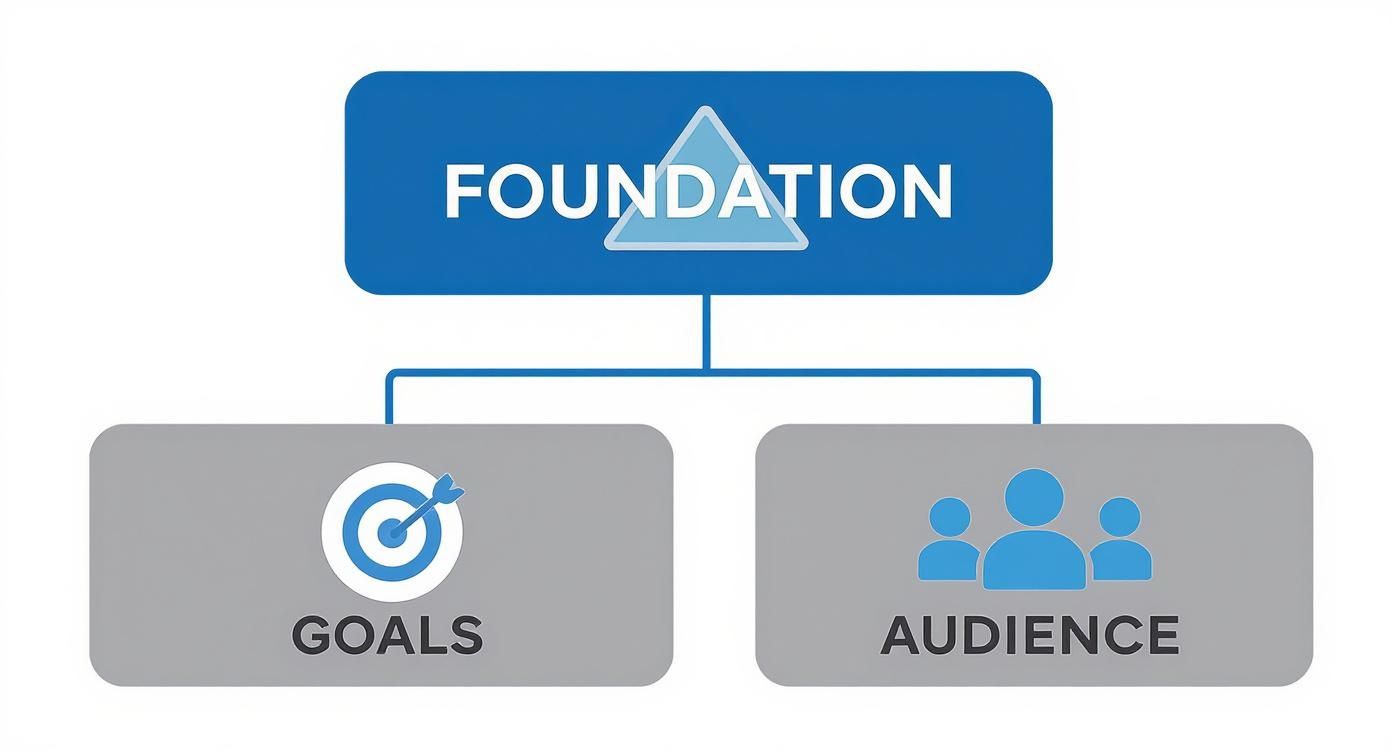
A solid content plan is never an accident. It’s a direct result of knowing why you’re posting and who you’re serving.
Brainstorming Your Core Themes
So, how do you find these magic pillars? It’s a mix of introspection and observation—looking inward at what you know and outward at what your audience needs. The strongest themes live at that intersection.
Kick things off by asking yourself a few direct questions:
- What expertise do I actually have? What subjects could you talk about for hours without a script? This is about your hard-earned skills, unique experiences, and professional wisdom.
- What are my audience's biggest headaches? Look back at your audience persona. What problems are they complaining about on Slack or trying to solve late at night?
- What am I genuinely passionate about? Real enthusiasm is contagious. What topics in your field actually light you up? People can spot a faker a mile away.
- What results have I delivered? Think about your wins, big and small. Can you reverse-engineer those successes into frameworks, case studies, or lessons for others?
As you answer these, themes will start bubbling to the surface. For a startup founder, maybe it’s "Bootstrapping Growth," "Building a Killer Team Culture," and "No-BS B2B Sales Tactics." A freelance consultant might land on "Client Relationship Mastery," "Project Efficiency Hacks," and "The Business of Freelancing."
Connecting Pillars to Post Intent
Defining your pillars is the first half of the battle. The real magic happens when you connect these broad themes to a specific post intent. Every single piece of content needs a job. On LinkedIn, that job usually falls into one of three buckets: Educate, Inspire, or Convert.
This simple framework forces you to create a balanced content diet that meets your audience where they are, from "who is this person?" to "I need to hire them." A study of over 3,000 LinkedIn posts found that 'how-to' and list-style posts absolutely crush it, especially longer, well-structured ones. This tells us one thing loud and clear:
The LinkedIn audience craves depth and actionable advice. They're not just scrolling; they're looking for solutions. You can dig into these LinkedIn content findings on brentonway.com.
Let's see how this plays out in the real world.
A Practical Pillar and Intent Framework
Imagine one of your content pillars is "Effective Project Management." You wouldn’t just post vague thoughts about it. Instead, you'd intentionally map that single pillar across the different intents to create a rich, varied content plan.
Connecting Content Pillars to Post Intents
Use this table as a guide to transform your core topics into a diverse and engaging content plan that serves different audience needs.
| Content Pillar Example | Educate Intent | Inspire Intent | Convert Intent |
|---|---|---|---|
| Effective Project Management | A carousel breaking down the "5 Steps to a Flawless Project Kickoff." This gives immediate, actionable advice. | A text-only story about a project that almost went off the rails but was saved by one specific management technique. This builds an emotional connection. | A post sharing a free, downloadable project plan template and inviting followers to grab it via a link in the comments. This generates a lead. |
| B2B Marketing Strategy | A short video explaining the difference between lead generation and demand generation. This clarifies a common point of confusion. | A post celebrating a client's success story, showcasing a 30% increase in qualified leads after implementing your strategy. This provides social proof. | An announcement for a free webinar on "How to Build Your 2024 B2B Marketing Plan," with a clear registration link. This is a direct call to action. |
See how that works? You're consistently delivering value with your "Educate" and "Inspire" content, which builds trust and makes you the go-to expert.
By the time you post a "Convert" piece, it doesn't feel like a cold, sleazy sales pitch. It feels like a natural and helpful next step for an audience you’ve already served. This balanced, ethical approach is what makes a linked in content strategy not just powerful, but sustainable for the long haul.
Choosing Content Formats That Actually Engage
Once you’ve nailed down your content pillars and post intents, the next big decision is choosing the right vehicle to deliver your message. This isn't a small detail. On LinkedIn, the format you pick is just as important as the words you write.
Choose the right one, and you’ll stop the scroll. Choose the wrong one, and your best ideas will get completely ignored.
Think of each format as a specific tool in your workshop. You wouldn't use a hammer to saw a board, right? The same logic applies here. A text-only post is perfect for a personal story, but a visual guide might be a total game-changer for explaining a complex process. Let's walk through the options and how to use them for maximum impact.
The Power of Simple Text Posts
Never, ever underestimate a well-written text post. It might feel basic, but its simplicity is its strength. This format excels at personal storytelling and sharing authentic insights because it feels less like an ad and more like a genuine conversation.
The key is a strong opening line that immediately grabs your reader. If you’re ever stuck staring at a blank page, our free hook generator can spark some fresh ideas. From there, structure your post with plenty of white space—short paragraphs, maybe some bullet points—to make it easy to scan on a phone.
Use this format for:
- Sharing a personal story or a hard-won lesson from a professional setback.
- Posing a thought-provoking question to get a real discussion going.
- Announcing a quick update or dropping a single, powerful industry insight.
Carousels and Multi-Image Posts
Visuals are a massive engagement driver on LinkedIn. Carousels (which are just slick PDFs you can swipe through) and multi-image posts are fantastic for breaking down complex topics into bite-sized, digestible steps. They let you tell a visual story, which makes your information stick.
Since visuals are so critical, learning about creating social media graphics that convert is a skill worth investing in. You don't need to be a designer, either. Modern, affordable tools make it easy to create clean, on-brand graphics without a huge budget.
The data backs this up. Recent research shows that engagement is climbing on LinkedIn, with multi-image posts leading the charge with an average engagement rate of 6.60%. This just hammers home the power of visual storytelling, especially for things like showcasing company culture or walking through a key process.
Think of a carousel as a mini-presentation. Each slide builds on the last, guiding your audience through a concept in a structured, engaging way. It’s an educational powerhouse.
Native Video: The Authenticity Magnet
Video is another format that just keeps growing, pulling in an average 5.60% engagement rate. The secret to winning with video on LinkedIn isn’t a huge production budget; it’s authenticity. In fact, low-production, "behind-the-scenes" clips often crush slick corporate ads because they feel real and build trust.
Just use your smartphone. Record a quick one- or two-minute video sharing a tip, reacting to an industry trend, or offering a glimpse into your workday. This human-first, ethical approach is exactly what LinkedIn’s algorithm rewards, and it’s an incredibly effective way to connect with your audience on a deeper level.
Polls and Interactive Content
Finally, don’t forget the simple power of asking a direct question. Polls are a low-effort, high-impact way to get instant feedback from your audience, understand their pain points, and spark conversations in the comments.
They give your followers an easy, almost frictionless way to engage with your content.
By matching the right format to your message, you ensure your valuable insights get seen, remembered, and acted upon. It's a strategic choice that can make all the difference.
Creating a Sustainable Editorial Calendar

If there's one non-negotiable for a successful LinkedIn strategy, it's consistency. Random, sporadic posts just get lost in the feed. A steady, reliable stream of valuable content, on the other hand, builds trust and keeps you top-of-mind with your audience.
This is where an editorial calendar becomes your secret weapon. It’s what turns your big-picture strategy into a concrete, day-by-day action plan.
Think of it as your content command center. An editorial calendar completely eliminates the daily panic of staring at a blank cursor, wondering, "What on earth should I post today?" Instead, your content pillars, formats, and schedule are all mapped out weeks ahead. This frees you up to focus on what really matters: creating great content, not just more content.
The goal is to build a sustainable, affordable rhythm that actually works for you, not to burn out by chasing an impossible posting schedule.
Finding Your Ideal Posting Cadence
So, how often should you post? The honest answer is as often as you can consistently share something of high quality. There’s no magic number, but for most professionals, 3-5 well-crafted posts per week is a powerful and realistic target.
This frequency keeps you visible without overwhelming your audience or, just as importantly, yourself. Remember, a single thoughtful, engaging post is worth far more than five rushed, generic updates. The best cadence is the one you can stick with for the long haul.
A sustainable editorial calendar isn't a rigid prison; it's a flexible framework that provides structure. It gives you the freedom to be creative because the "what" and "when" are already taken care of.
A great way to start is by assigning your content pillars to specific days of the week. This simple trick makes planning a breeze and ensures you’re always delivering a balanced mix of content.
Structuring Your Content Calendar
You don't need fancy, expensive software to get this done. A simple spreadsheet is more than enough to build a powerful and effective calendar. The key is to organize it in a way that gives you a clear, at-a-glance view of everything in the pipeline.
Of course, if you want to streamline the process even further, specialized and affordable LinkedIn scheduling tools can automate your posting and keep everything in one place. You can see how different platforms stack up by comparing Contentide to other tools like Taplio. This approach helps make sure your well-laid plans are executed flawlessly.
Here are the essential columns your calendar should include to stay organized:
- Date: The exact day the post will go live.
- Time: The specific time for publishing (you can refine this later by checking your analytics).
- Content Pillar: The core theme your post connects to (e.g., Team Culture, B2B Marketing).
- Post Intent: What is the job of this post? (Educate, Inspire, or Convert).
- Format: The type of content you’ll create (Text-only, Carousel, Video, Poll).
- Headline/Hook: The first line of your post, designed to stop the scroll.
- Main Body/Copy: The full text of your post.
- Call to Action (CTA): What you want the reader to do next (e.g., "Comment with your thoughts," "Visit our site").
- Status: A simple workflow tracker (e.g., Idea, Draft, Scheduled, Published).
By planning your content this way, you can start working in batches. Just set aside a few hours to brainstorm and draft a full month's worth of ideas. This is the secret to executing a powerful linked in content strategy without letting it take over your entire schedule. It’s all about working smarter, not harder.
Measuring What Matters and Improving Your Strategy
A great LinkedIn strategy isn't something you "set and forget." Think of it as a living, breathing process that learns and evolves with every post. The final piece of our puzzle is figuring out how to measure what’s working and use real data—not just guesswork—to sharpen your content over time.
This isn’t about chasing vanity metrics like raw follower counts or likes. Sure, those can feel good, but they don't pay the bills. We're going to focus on the numbers that actually signal business impact and help you fine-tune your approach, ethically and affordably.
Key Metrics That Actually Indicate Growth
To really understand what's landing with your audience, you need to track the right data points. These metrics cut through the noise and tell you if your content is truly connecting and, more importantly, driving action.
Here are the core numbers I always keep an eye on:
- Engagement Rate: This is the big one. It’s the total engagements (likes, comments, reposts) divided by your total impressions. A high engagement rate is the clearest sign that your content is genuinely resonating, not just being passively scrolled past.
- Click-Through Rate (CTR): When you share a link to your website, a blog post, or a landing page, this tells you what percentage of people who saw it actually clicked. It's a direct measure of how well your content inspires people to take the next step.
- Inbound DM Inquiries: Pay close attention to the messages hitting your inbox. A steady stream of relevant inquiries from potential clients, partners, or collaborators is a powerful indicator that your content is successfully positioning you as a trusted authority.
- Profile Views: An uptick in people checking out your profile after seeing your content means you've sparked their curiosity. They liked what you had to say and now they want to know more about who you are.
Establishing a Monthly Content Review
The key to getting better is building a simple, repeatable review process. Don't let the data intimidate you. A quick monthly check-in is all it takes to gather powerful insights and make smarter decisions for the next month.
Just set aside an hour at the end of each month to look at your performance. During this review, ask yourself a few critical questions:
- Which posts had the highest engagement rate? Try to spot the patterns. Was it a specific format, like a carousel? A certain content pillar? A particular tone of voice that really hit home?
- Which posts drove the most clicks or DMs? This is your "Convert" content. Pinpoint what worked. What was the call to action, and why do you think it was so effective?
- What topics fell flat? It’s just as important to know what isn't working. If certain themes consistently get crickets, it might be time to retire them and experiment with something new.
This iterative process is the most ethical and affordable way to grow. You are letting your community's direct feedback guide your strategy, ensuring you consistently provide more of what they find valuable and less of what they don't.
This data-informed loop ensures your strategy not only moves you closer to your business goals but also deepens your connection with your audience. For B2B marketers, this is absolutely critical. After all, LinkedIn is 277% more effective at generating leads than other major social platforms and drives nearly half of all social traffic to B2B websites. You can discover more about LinkedIn's powerful lead generation capabilities on brentonway.com.
Your LinkedIn Content Strategy Questions Answered
Even with a perfect plan on paper, questions always pop up once you start putting it into practice. This last section is all about tackling those common "what ifs" with clear, straightforward answers to help you stay on track and keep your momentum.
How Often Should I Post on LinkedIn?
Look, consistency beats frequency every single time. For most of us, aiming for 3-5 high-quality posts a week is the sweet spot. It keeps you visible in the feed without burning you out or flooding your audience.
It's way better to share three thoughtful, well-crafted posts than it is to rush out seven mediocre ones just to hit a quota. Choose an ethical, sustainable pace you can stick with for the long haul. Once you get going, you can peek at your analytics to see when your audience is most active and tweak your schedule to get the most impact.
What Is the Best Way to Use Hashtags?
Think of hashtags as little signposts that guide the right people to your content. A smart, clean approach is to use 3-5 super-relevant hashtags on each post. This keeps things looking professional while giving your discoverability a nice boost.
A solid mix usually includes:
- One broad industry tag (like #B2BMarketing)
- One or two niche topic tags (like #ContentStrategyTips)
- One unique branded tag (#YourBrandName)
Do a little digging to see what tags your audience and competitors are using. And always, always put them at the end of your post. You want your opening hook and your core message to be the star of the show.
Should I Post from a Personal Profile or a Company Page?
Honestly, the best strategy uses both. Your Company Page is your brand’s official headquarters—the spot for company news, product updates, and any paid ads. Think of it as your digital storefront.
But here’s the thing: people connect with people. Posts from personal profiles, especially from founders, leaders, and team members, almost always get way more reach and engagement. The real magic happens with a hybrid model. Use the Company Page as the central hub for your content, then get your employees to share those posts with their own authentic commentary. That combination of official brand messaging and genuine employee advocacy is what really drives results.
For more answers to common questions, you can always check out our complete Contentide FAQ page.
Ready to stop staring at a blank page and start publishing high-impact LinkedIn content? Contentide uses AI to turn your rough ideas into polished, authentic posts in minutes. Build your authority and grow your network without the stress. Try our Free plan today and see the difference for yourself at https://contentide.com.
Hope you found this helpful. Feel free to share your thoughts.