What Is Professional Networking Your Guide
Unlock your career potential. This guide explains what is professional networking with actionable strategies to build authentic, long-lasting connections.

Professional networking is a term that gets thrown around a lot, often conjuring images of awkward conference rooms, forced smiles, and a desperate exchange of business cards.
Let's be honest, that whole scene feels transactional and outdated. It misses the entire point.
What Professional Networking Really Means

True networking isn't about collecting contacts like trading cards. It's about building a real community—a trusted circle of peers, mentors, and collaborators who genuinely want to see each other win.
A better way to think about it is like tending to a garden. You don't just show up on harvest day demanding results. You have to plant seeds, water them consistently, and nurture the relationships over time. It's about offering help, sharing what you know, and taking a real interest in other people's goals. This ethical, "give-first" mindset is the single most powerful strategy for long-term career growth.
The Foundation of Authentic Connections
Building these relationships starts with a simple but profound shift in your thinking. Instead of walking into a conversation thinking, "What can this person do for me?", you should be asking, "How can I help this person?"
When you make that switch, networking stops feeling like a self-serving chore and becomes a collaborative, rewarding experience.
The numbers back this up. A staggering 85% of all jobs are filled through personal connections, not by blindly applying online. This statistic from Genius shows just how much weight these relationships carry in the real world.
The real power of networking isn't in who you know, but in who knows you, trusts you, and wants to see you succeed. It's an investment in social capital that pays dividends throughout your career.
So, how do you build this foundation? It all comes down to a few core pillars.
The table below breaks down the fundamental components that define effective professional networking today. These aren't just buzzwords; they are the active principles behind every strong professional relationship.
The Core Pillars of Modern Professional Networking
| Pillar | Description | Example Action |
|---|---|---|
| Reciprocity | The idea of mutual exchange. It’s about being as willing to give help as you are to receive it, creating a balanced and supportive dynamic. | Forwarding a job opening to a connection before they even ask for help. |
| Authenticity | Genuine connections thrive when you are yourself. People are drawn to honesty and transparency, so ditch the script and have real conversations. | Sharing a personal story about a professional challenge you overcame. |
| Consistency | A strong network isn’t built overnight. It requires small, consistent efforts over time, like checking in or sharing a relevant article. | Sending a quick "thinking of you" message to a contact every few months. |
By focusing on these principles, you move beyond just collecting names and start building a robust support system that will genuinely propel your career forward. It's a game-changer.
Why Building Your Network Is Worth It
Let’s be honest: networking can feel like a chore. But if you think of it as just collecting contacts to land your next job, you're missing the point entirely.
The real value is in building a personal board of advisors—a diverse group of smart people who can offer different perspectives, share knowledge you won't find in a textbook, and open doors you never even knew existed.
A strong network is your inside track. It’s how you hear about the unwritten rules of your industry, learn about new tools before they go mainstream, or get the real story on a company's culture from someone who’s actually lived it. This is the stuff that comes from real conversations, not blog posts.
Unlocking Career-Changing Opportunities
The benefits aren't just fuzzy concepts; they create real, tangible advantages. A quick chat at a virtual event could spark a breakthrough idea for your next project. A trusted contact might give you the one piece of advice you need right before a critical career decision.
These connections are the bedrock of growth, mentorship, and unexpected collaborations.
And the market reflects this. The global professional networking market is set to explode from USD 65.64 billion in 2025 to a staggering USD 201.12 billion by 2030. That kind of growth tells you just how vital these connections have become. You can dig into the data on professional networking market growth to see the full picture.
Your network is your most powerful career asset. It's a safety net during uncertain times, a launchpad for new ventures, and a source of continuous learning and support.
Building these relationships isn’t about what you can get; it’s about what you can create together. Let’s break down the specific advantages.
Key Advantages of a Strong Professional Network
Access to Mentorship: Connecting with seasoned pros gives you a direct line to people who have already navigated the challenges you're facing. This kind of guidance helps you sidestep common mistakes and dramatically shortens your learning curve.
Increased Visibility: When you consistently show up and offer value, you stay on people's radar. That visibility means you’re the first person they think of when a new opportunity, project, or collaboration pops up.
Shared Knowledge and Innovation: Your network is the ultimate sounding board. Bouncing ideas off peers with different backgrounds almost always leads to more creative and solid solutions than you could ever cook up on your own.
Ultimately, truly understanding what is professional networking means seeing it for what it is: an ongoing investment in your future. Every genuine relationship you build adds another layer of support and opportunity to your career, and its value only compounds over time.
Finding Your Networking Style
Let's clear the air on something: professional networking isn't a one-size-fits-all game. The myth that you have to be a hyper-social extrovert to get ahead holds back far too many talented people.
The most effective networking is authentic networking. It's about finding an approach that actually fits your personality and goals—one where you can build real connections without feeling like you're putting on an act.
Digital-First Connections
For a lot of us, online networking has become the go-to method, especially as the world has shifted to digital-first communication. It’s not just a trend; by 2025, over 99% of professionals will be using online platforms to connect.
LinkedIn is the undisputed giant here, with an incredible 1.1 billion members worldwide. This is fantastic news for anyone who prefers thoughtful, measured conversations over navigating a loud, crowded room.
The goal isn't to be everywhere at once. It's to find the specific spaces—whether online or in-person—where your ideal connections already gather and where you can comfortably contribute to the conversation.
This decision tree breaks it down visually. Whether your goal is a new job, a collaboration, or just gaining knowledge, it all starts with that first connection.
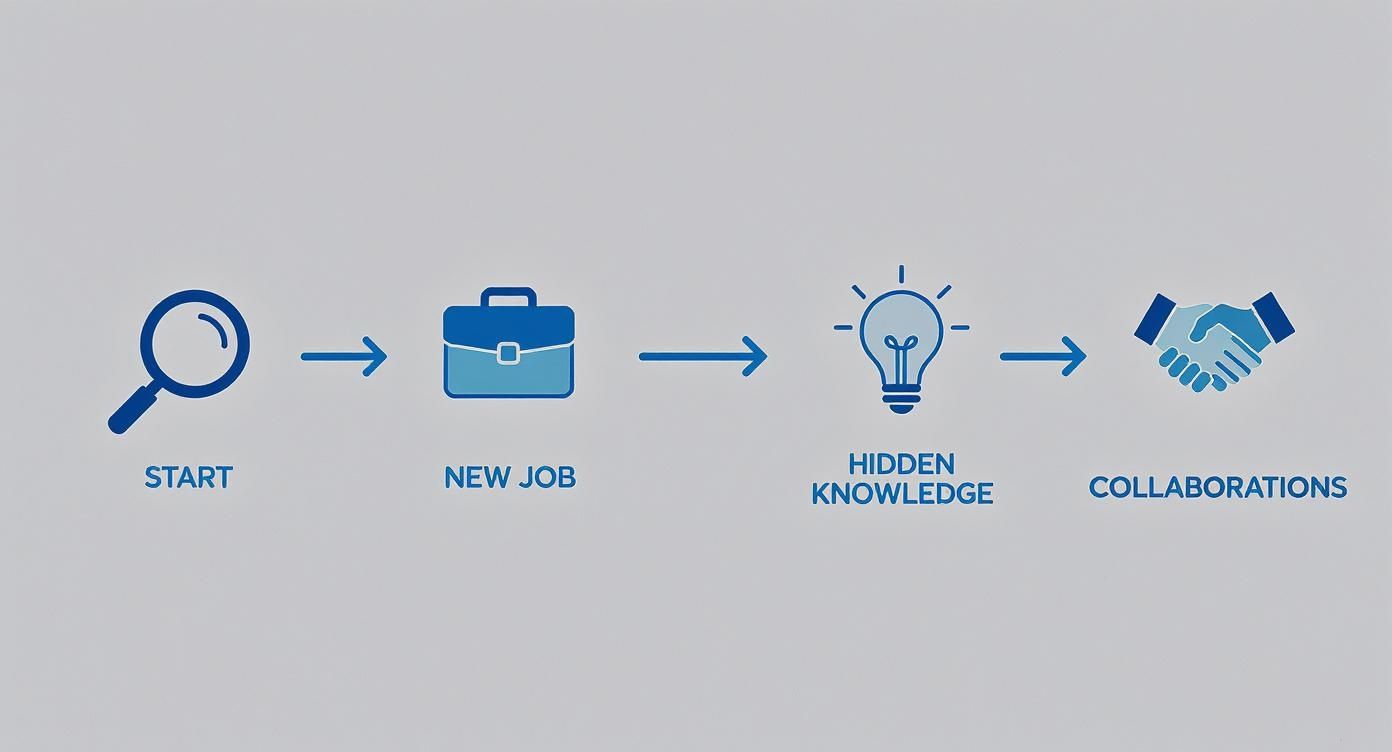
As you can see, every major career outcome branches off from the simple act of starting a conversation. It's a powerful reminder that finding a sustainable networking style is what really matters.
Choosing Your Networking Arena: Online vs. In-Person
Not sure where you fit in? Think about the environment where you feel most confident. For some, the idea of a conference is draining; for others, it's energizing. If you're on the quieter side, this great guide on how to network as an introvert offers some solid tips for building genuine connections without the pressure.
The key is to weigh the pros and cons to find the path that best suits you.
To help you decide where to invest your energy, here’s a quick comparison of the two main networking environments. Remember, it's rarely about choosing just one; it's about finding the right mix for your personal style.
| Feature | Online Networking (e.g., LinkedIn) | In-Person Networking (e.g., Conferences) |
|---|---|---|
| Pace & Control | You’re in the driver’s seat. This allows for thoughtful, well-crafted interactions on your own schedule. | Fast-paced and spontaneous. It can be incredibly energizing but also a bit overwhelming at times. |
| Accessibility | Global reach from your keyboard. Geographical barriers simply don't exist, opening up a world of connections. | Limited by location. Often requires a significant investment of time and money for travel. |
| Depth of Connection | Can take longer to build deep rapport without face-to-face cues and body language. | Allows for immediate rapport-building. A shared experience and a handshake can go a long way. |
| Best For | Introverts, busy professionals, and anyone targeting a global or highly niche audience. | Extroverts, natural relationship-builders, and those focused on a specific local industry or event. |
Ultimately, a winning strategy is less about following a rigid script and more about self-awareness. When you choose an approach that feels natural, you’re far more likely to stick with it, build stronger relationships, and hit your career goals.
Practical Strategies for Building Connections

Knowing the theory is one thing, but putting it into practice is where real relationships are built. The good news? You don't need a complex or expensive strategy. Building a strong network comes down to simple, repeatable actions that focus on genuine interest and giving value first.
This is your playbook for making every contact count. It all starts long before you ever click "connect." It begins with understanding what you bring to the table and having a real curiosity about other people. The goal isn't to just collect contacts; it's to start conversations.
Crafting the Perfect Introduction
Your first impression online is everything. Sending a generic, default LinkedIn connection request is like handing someone a blank business card. It's forgettable and, frankly, shows you didn't put in any effort. A truly effective introduction is always personal and ethical.
Here’s a simple habit: before you connect, take just two minutes to look at their profile. Find one piece of common ground. Did you go to the same school? Do you admire a project they just posted about? Mentioning that specific detail shows you’ve done your homework and you're interested in them, not just what they can offer you.
Knowing how to effectively connect on LinkedIn is a non-negotiable skill for anyone looking to expand their professional circle.
Here’s a simple template you can adapt:
"Hi [Name], I saw your recent post about [Specific Topic], and your insights on [Detail] really resonated with me. I'm also passionate about [Your Shared Interest] and would appreciate the opportunity to connect and follow your work."
This approach is respectful and specific. It puts the focus on their contributions, which is the perfect way to lay the groundwork for a real professional relationship.
Mastering the Art of the Follow-Up
The connection is just the starting line. The real trust is built in the follow-up. A thoughtful message within 24-48 hours after connecting keeps the interaction fresh in their mind and opens the door for a real conversation.
Crucially, your follow-up shouldn't have an "ask." Not yet. Instead, your job is to reinforce the connection by offering a little bit of value. Share a relevant article, give another compliment on their work, or ask a smart, open-ended question about their industry. Keep it light and focused on them.
A powerful and affordable way to keep these new connections warm is by consistently sharing your own insights. Tools can make this much easier, helping you manage your content and engagement without spending all day on it. If you're looking at options, a detailed comparison of platforms like Contentide and SocialSonic can show you what's out there.
Here’s a template for a simple, value-first follow-up:
- Subject: Great to connect, [Name]!
- Body: Thanks for connecting. I was thinking more about our shared interest in [Topic] and thought you might find this article on [Related Subject] interesting. Hope you have a great week!
This no-strings-attached approach is a game-changer. It shows you’re invested in the relationship itself, not just what you can get out of it. It’s a simple move that builds a reputation as a thoughtful, generous professional—the very core of sustainable networking.
The Networking Landmines: Common Mistakes to Avoid
Knowing what to do is only half the battle. Just as important is knowing what not to do. A few common missteps can easily sink your best efforts before you even get started. Steering clear of these pitfalls is the key to building a network that lasts.
The most common ethical error I see? Being purely transactional. This is when you only pop up in someone's inbox when you need something—a job referral, a quick introduction, or an answer to a problem. This approach makes people feel like a means to an end, and it's the fastest way to burn a bridge.
Instead of waiting until you're in a jam, focus on building the relationship when the stakes are low. A simple, no-strings-attached message to say hello or share an article you thought they'd like keeps the connection warm. It shows you value them as a person, not just for what they can do for you.
Neglecting the People You Already Know
Another huge pitfall is getting so caught up in the chase for new connections that you forget to tend to the ones you already have. Your existing network is a goldmine of support, knowledge, and opportunity, but like any garden, it needs regular watering.
It’s a massive missed opportunity to let relationships with former colleagues, mentors, or old classmates go cold. These are the people who already know you, trust your work, and are most likely to have your back.
A well-maintained network is your career's best safety net. It costs absolutely nothing to send a thoughtful message, but the goodwill it creates is priceless.
A few simple actions can make all the difference:
- Engage on LinkedIn: A genuine comment on a contact’s post is a low-effort way to stay on their radar.
- Celebrate Their Wins: When someone you know gets a promotion or a new gig, send a personal congratulations. It takes ten seconds and means a lot.
- Be a Connector: If you know two people who could benefit from meeting each other, make the introduction.
Dropping the Ball on the Follow-Up
You just had a great conversation and made a promising new connection. Don't let that momentum fizzle out. Forgetting to follow up is like planting a seed and never watering it. The potential is there, but it will wither from neglect.
A quick, personalized follow-up message within 24-48 hours cements the interaction in their mind. It’s a simple act of courtesy that shows you were paying attention and are serious about building a real connection. Honestly, this one small step is what separates the pros from the amateurs and lays the groundwork for a relationship that can grow.
Network Smarter, Not Harder
Let's be honest, time is your most precious asset. The very idea of cramming "networking" into an already overflowing schedule feels like a fast track to burnout. But what if the goal wasn't to work harder, but to build a smarter, more sustainable habit?
This is exactly where the power of micro-networking comes in.
It's all about breaking down that big, intimidating concept of networking into small, consistent actions that deliver huge results over time. Instead of an occasional, high-effort chore, it becomes a manageable—and even rewarding—daily practice. You don't need to spend hours at expensive industry events to build a powerhouse network.
Think of it as compound interest for your career. One small, daily deposit of effort builds into a massive asset down the road.
Making Micro-Networking a Habit
So what does this actually look like in the real world? It's far simpler than you think. The key is to weave these tiny actions into your existing routine until they become second nature.
Here are a few practical examples:
- The 15-Minute LinkedIn Scroll: Set aside just 15 minutes each morning to engage on LinkedIn. Leave a thoughtful comment on a connection's post or share an interesting article with your own take.
- The Weekly Thoughtful Message: Once a week, send one personalized, no-strings-attached message to someone in your network. Check in, congratulate them on a recent win, or share something you think they'd find useful.
- The Monthly Virtual Coffee: Schedule just one 20-minute virtual coffee chat a month with a new connection or someone you want to get to know better.
These actions might seem small, but their cumulative impact is massive. They keep you visible, reinforce your connections, and build goodwill, all without draining your energy.
Professional networking is a marathon, not a sprint. Small, consistent efforts will always outperform infrequent, heroic ones. Your goal is progress, not perfection.
Smart, affordable tools can also be a game-changer for maintaining consistency. For instance, if you're trying to streamline your LinkedIn activity, checking out a comparison of Contentide versus other popular tools like Taplio can show you how to automate the repetitive tasks while keeping your voice authentic. This frees you up to focus on what really matters: building genuine relationships.
Your Professional Networking Questions Answered
Even with a solid grasp of what networking is, you’ll still run into specific, tricky situations. Let's walk through some of the most common questions I hear and give you clear, practical answers to help you navigate them with confidence.
How Do I Network If I Am An Introvert
If large events drain you, your biggest advantage is focusing on quality over quantity. Forget the crowded, often costly, rooms and start where you're comfortable—online.
Platforms like LinkedIn are perfect because they give you the space to craft thoughtful messages without the pressure of an in-person conversation. From there, aim for one-on-one interactions like virtual coffee chats or informational interviews. A handful of deep, authentic connections will always be more valuable than a hundred superficial ones.
What Is The Best Way To Follow Up
The key is to be prompt and personal. Send a message within 24 hours of your conversation.
Don't just say, "Nice to meet you." Reference something specific you talked about to jog their memory. The real pro move? Instead of asking for a favor right away, offer something of value first—maybe an article you mentioned or an introduction to someone in your network. It’s a simple, give-first approach that builds immediate goodwill.
How Often Should I Contact My Network
Think consistent, light-touch engagement. You're aiming to stay on their radar, not become a nuisance.
For your closer contacts, a personal check-in every few months is perfect. For everyone else in your broader network, simply liking or commenting on their LinkedIn posts is an incredibly effective, low-effort way to maintain the connection. The goal is to be a familiar, positive presence. You can find more strategies for consistent engagement on the Contentide blog.
Ready to build your network with consistent, high-quality content? Contentide helps you create authentic LinkedIn posts in minutes, so you can focus on building relationships that matter. Start for free on Contentide.com and turn your insights into connections.
Hope you found this helpful. Feel free to share your thoughts.